
ESG due diligence is defined as a systematic assessment of a company’s environmental, social, and governance risks and opportunities, conducted to inform transaction decisions and regulatory compliance. The process is now a material driver of deal value, not a reputational checkbox. Regulations including the Corporate Sustainability Reporting Directive (CSRD), the Sustainable Finance Disclosure Regulation (SFDR), and the Corporate Sustainability Due Diligence Directive (CSDDD) have made this assessment legally consequential. For compliance officers and sustainability professionals, understanding ESG due diligence explained in full means grasping both its process architecture and its direct impact on deal terms, post-acquisition integration, and ongoing regulatory exposure.
What is the ESG due diligence process in M&A transactions?
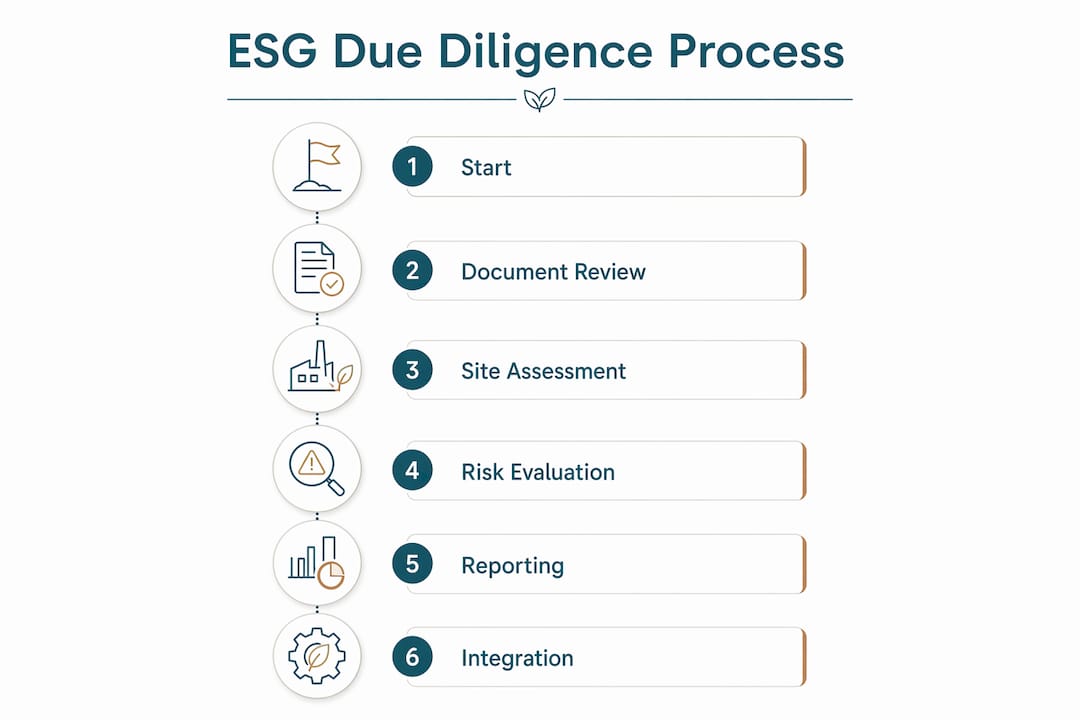
The role of ESG in M&A due diligence begins at the Letter of Intent stage, not after signing. Starting ESG assessment at the LOI captures sustainability risks early enough to influence purchase price negotiations, indemnities, and escrow terms. Waiting until late-stage diligence means discovered liabilities have less room to reshape deal structure.
The ESG due diligence acquisition process runs across three parallel workstreams: environmental, social, and governance. Each has a distinct timeline and data requirement.

| Workstream | Assessment type | Typical timeline |
|---|---|---|
| Social and governance | Document review, interviews | 4–8 weeks |
| Environmental Phase I | Site history, records review | 3–6 weeks |
| Environmental Phase II | Physical soil and water testing | Additional 4–8 weeks |
Social and governance assessments require 4–8 weeks, while Phase I environmental work takes 3–6 weeks. If Phase II physical testing is triggered, the total environmental timeline extends to as long as 14 weeks. That range matters because it directly affects deal closing schedules.
Running ESG workstreams in sequence rather than in parallel is the single most common cause of timeline overruns. Initiating environmental, legal, and financial diligence simultaneously compresses the overall schedule without sacrificing rigor.
Pro Tip: Request the target company’s environmental permits, utility bills, and waste disposal records on day one. These documents reveal operational realities that public sustainability reports often obscure.
Which environmental, social, and governance factors are evaluated?
ESG risks span three pillars, each carrying distinct financial and reputational consequences. Poor ESG performance can affect company valuation by 5–15%, which makes thorough pillar-level assessment a financial necessity, not a formality.
Environmental factors
Environmental assessment focuses on contamination history, current emissions levels, regulatory compliance status, and exposure to climate-related physical risks. A manufacturing target with unreported soil contamination, for example, carries remediation costs that can run into millions of dollars. Compliance officers must verify permits, waste disposal contracts, and emissions data against regulatory filings.
Social factors
Social assessment covers labor practices, health and safety records, human rights exposure in supply chains, and employee relations. A target operating in jurisdictions with weak labor enforcement requires deeper supply chain mapping. Health and safety incident rates, workers’ compensation claims, and union agreements all feed into this assessment.
Governance factors
Governance review examines board composition, internal controls, whistleblower policies, anti-corruption programs, and executive compensation structures. Weak board oversight of ESG is a leading indicator of future compliance failures. Governance gaps are often the fastest to remediate but the most damaging if left unaddressed post-close.
High-priority risk categories by ESG pillar:
- Environmental: Contaminated sites, unreported emissions, expired environmental permits, climate physical risk exposure
- Social: Labor standard violations, supply chain human rights gaps, elevated workplace injury rates, unresolved discrimination claims
- Governance: Absent or ineffective whistleblower channels, undisclosed related-party transactions, inadequate anti-bribery controls, board ESG accountability gaps
Verifying public sustainability claims against internal operational data through data triangulation is the primary method for detecting greenwashing. Cross-referencing a company’s published carbon reduction targets against actual utility invoices and production records reveals whether reported performance matches operational reality.
Pro Tip: Never rely on a target’s standalone sustainability report as a primary source. Triangulate it against audited financials, regulatory filings, and operational data to surface discrepancies before they become post-closing liabilities.
How do ESG findings integrate into deal structuring and post-acquisition activities?
ESG findings now drive specific deal terms, including purchase price adjustments, indemnities, and escrow holdbacks. Generic compliance-with-law representations no longer provide adequate protection. Acquirers need ESG-specific warranties covering emissions data accuracy, labor compliance, and environmental remediation obligations.
Escrow holdbacks tied to environmental remediation milestones are increasingly common in deals where Phase II testing reveals contamination. Indemnities linked to regulatory fines under CSRD or CSDDD give acquirers recourse if undisclosed compliance gaps surface after closing. Deal teams that treat ESG as a standalone report rather than a negotiating input leave material value on the table.
Post-acquisition integration is where most ESG programs stall. The recommended sequence is structured and time-bound:
- Days 1–30: Integrate sustainability data systems. Map the acquired entity’s data sources to the acquirer’s reporting framework, whether GRI, SASB, TCFD, or CSRD. ESG data integration is the most time-consuming post-merger workstream and must begin immediately.
- Days 31–90: Harmonize ESG policies. Align the target’s labor, environmental, and governance policies with the acquirer’s standards. Identify conflicts and resolve them before they create regulatory exposure.
- Days 91–180: Conduct a combined ESG baseline assessment. Produce a unified ESG performance baseline for the merged entity. This baseline feeds the first consolidated sustainability report under the acquirer’s framework.
- Days 181–365: Implement continuous monitoring. Establish ongoing data collection, KPI tracking, and incident reporting protocols. Assign accountability at the business unit level.
Data integration for sustainability reporting must start within 30 days of closing, and policy harmonization must complete within 90 days to stay aligned with CSRD timelines. Missing these windows creates compounding compliance risk as reporting deadlines approach.
What are the common challenges in conducting effective ESG due diligence?
The most damaging misconception in ESG due diligence is treating it as a one-time audit. ESG due diligence is a continuous cycle of identification, assessment, action, and remediation. Organizations that close the file at deal signing inherit risks they never fully mapped.
| Common challenge | Best practice solution |
|---|---|
| Greenwashing by target company | Triangulate public claims against utility bills, financial records, and operational data |
| Environmental testing delays | Launch Phase I environmental assessment at LOI, parallel to legal and financial diligence |
| Incomplete governance data | Request board minutes, internal audit reports, and whistleblower logs as part of initial data room |
| Post-close data integration gaps | Assign a dedicated ESG integration lead with a 30-day data mapping mandate |
| Regulatory framework misalignment | Map target’s current disclosures to CSRD, CSDDD, and SFDR requirements before close |
Physical environmental testing timelines catch deal teams off guard more often than any other ESG workstream. Phase II testing, triggered by Phase I findings, adds 4–8 weeks to a schedule that most deal teams have not budgeted for. The fix is simple: start environmental streams on day one, not after financial diligence concludes.
Data volume is the other persistent challenge. A mid-market acquisition can generate thousands of documents across environmental permits, labor records, governance filings, and supplier contracts. AI-powered platforms that apply cross-document analysis to large document sets surface discrepancies that manual review misses. This is where technology shifts from a convenience to a necessity.
Pro Tip: Build a dedicated ESG data room request list before the LOI is signed. Include environmental permits, OSHA logs, board ESG committee charters, supplier codes of conduct, and the last three years of utility invoices. A complete initial request prevents repeated follow-ups that delay the timeline.
Key Takeaways
Effective ESG due diligence is a continuous, structured process that begins at the Letter of Intent stage and extends well beyond deal close to protect valuation and ensure regulatory compliance.
| Point | Details |
|---|---|
| Start at the LOI stage | Early ESG assessment captures risks that directly influence purchase price, indemnities, and escrow terms. |
| Run workstreams in parallel | Launching environmental, social, and governance reviews simultaneously prevents timeline overruns of 4–8 weeks. |
| Use data triangulation | Cross-referencing public claims against internal records is the only reliable method for detecting greenwashing. |
| Embed ESG in deal terms | Specific ESG warranties and indemnities provide post-close protection that generic compliance clauses do not. |
| Treat it as a cycle, not an audit | Continuous monitoring post-acquisition reduces regulatory exposure and drives sustained ESG performance improvement. |
The shift I’ve seen in how ESG due diligence actually gets done
The conversation around ESG due diligence has changed fundamentally over the past few years. It used to be about reputational risk. Now it is about material financial exposure. The CSRD, CSDDD, and SFDR have created hard legal obligations that attach to acquirers the moment a deal closes. That shift changes everything about how compliance officers should approach the process.
The teams that get this right share one habit: they treat ESG as a deal workstream with the same rigor as financial or legal diligence. They assign dedicated resources, set parallel timelines, and build ESG findings directly into negotiation strategy. The teams that struggle treat ESG as a report to be filed after the lawyers finish.
The data accuracy problem is real and underappreciated. A target company’s sustainability report is a marketing document until you verify it. Utility invoices, OSHA 300 logs, board minutes, and supplier audit results tell a different story more often than deal teams expect. The 2026 regulatory compliance landscape gives acquirers less tolerance for post-close surprises than ever before.
My practical advice for compliance officers: own the ESG data room request list. Do not delegate it to the financial advisors. You know which documents reveal real operational behavior, and that knowledge is what separates a thorough ESG assessment from a checkbox exercise.
— ESG Team
How Esgautomated supports your ESG due diligence workflow
Compliance officers and sustainability professionals managing ESG due diligence need more than a checklist. They need a platform that collects, organizes, and maps ESG data to the frameworks that matter, including GRI, TCFD, CSRD, SASB, and CDP.
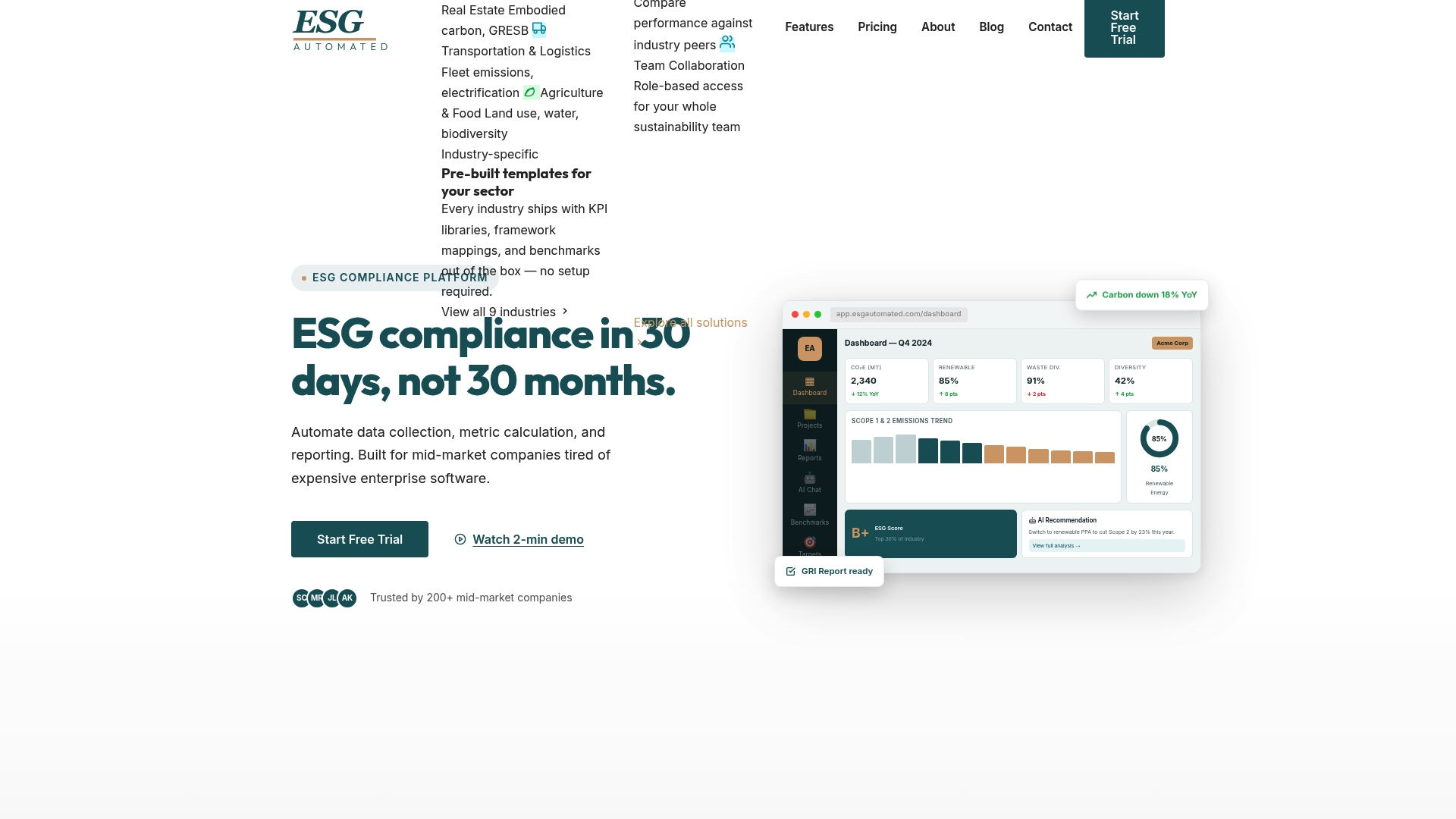
Esgautomated automates data collection and metric calculation across all major reporting frameworks, replacing manual spreadsheet processes that slow down post-acquisition integration. The platform delivers audit-ready ESG reports in 30 days, which means your first consolidated report after a merger meets regulatory timelines without a consultant engagement. Teams in financial services and technology use Esgautomated to align acquired entities with their existing ESG programs quickly and accurately. Visit Esgautomated to see how the platform fits your due diligence workflow.
FAQ
What is ESG due diligence?
ESG due diligence is a systematic assessment of a target company’s environmental, social, and governance risks and opportunities, conducted to inform transaction decisions and regulatory compliance. It covers contamination liabilities, labor practices, governance controls, and alignment with frameworks like CSRD and CSDDD.
When should ESG due diligence begin in an M&A process?
ESG due diligence should begin at the Letter of Intent stage. Early identification of ESG risks allows deal teams to factor findings into purchase price adjustments, indemnities, and escrow terms before deal structure is finalized.
How long does ESG due diligence take?
Social and governance assessments typically require 4–8 weeks. Environmental Phase I assessments take 3–6 weeks, and Phase II physical testing adds another 4–8 weeks if triggered by Phase I findings.
What is an ESG due diligence checklist for M&A?
An ESG due diligence checklist for M&A covers environmental permits, emissions data, OSHA incident logs, labor compliance records, board governance documents, whistleblower policies, supplier codes of conduct, and alignment with CSRD and SFDR disclosure requirements.
How do ESG findings affect deal terms?
ESG findings directly influence purchase price adjustments, specific ESG representations and warranties, indemnity provisions, and escrow holdbacks. Generic compliance-with-law clauses do not provide adequate protection against ESG-specific post-closing liabilities.