
The strongest esgplaybook.com alternatives for US corporate sustainability teams in 2026, are purpose-built platforms that automate data collection, map to frameworks like CSRD, SASB, TCFD, and GRI, and produce audit-ready disclosures without the manual overhead of spreadsheets or consultants. The field has matured quickly, and the right choice depends heavily on your industry, your existing financial systems, and whether you need a system of record or a supply chain intelligence hub.
| Platform | Best For | Key ESG Standards | Automation | Financial System Integration | Customer Support |
|---|---|---|---|---|---|
| Pelt8 | ESG data workflow management | GRI, SASB, TCFD | High | API-based | Dedicated CSM |
| Lookthrough | Financial services ESG transparency | TCFD, SFDR | Moderate | Strong financial data connectors | Specialist support |
| Apiday | Enterprise system integrations | GRI, CSRD | High | Extensive API ecosystem | Technical support |
| Viridad | Broad sustainability program oversight | GRI, SASB, TCFD | Moderate | ERP integrations | Dedicated team |
| Workiva | Financial-grade ESG disclosures | SEC, SASB, TCFD, GRI | High | Deep financial system integration | Enterprise-grade |
| Nasdaq Metrio | Audit-ready GHG and ESG reporting | CSRD, TCFD, ISSB, California climate laws | High | Concur, NetSuite, Workday | Guided onboarding |
| Novata | Private equity ESG data | SASB, GRI | Moderate | Private market data connectors | Dedicated support |
| EcoVadis | Supply chain supplier ratings | UN Global Compact, GRI, ISO 26000 | High | Procurement system integration | 500+ analysts |
| QuantifiedESG | ESG analytics and benchmarking | GRI, SASB, TCFD | Moderate | Dashboard integrations | Consulting-led |
| Good.Lab | Social and governance KPIs | GRI, SASB | Moderate | ERP-compatible | Dedicated CSM |
| BuildESG | Construction sector ESG compliance | GRI, SASB | Moderate | Construction ERP | Sector specialists |
| ESGTree | AI-driven ESG risk assessment | GRI, TCFD, SASB | High | API integrations | AI-assisted support |
How do these ESG Playbook alternatives compare on features and real-world use?
Workiva sits at the top of the enterprise tier for a reason. It delivers financial-grade ESG disclosures with the same audit rigor applied to 10-K filings, making it the go-to for public companies facing SEC climate disclosure requirements. Its integration with financial governance systems is deeper than most competitors.

Nasdaq Metrio is the strongest option for teams that need to cut disclosure costs fast. Clients report saving up to $223,000 and 5,400 hours on disclosure preparation through its guided automation workflows. It supports CSRD, TCFD, ISSB, and California climate laws out of the box, with prebuilt connectors to Concur, NetSuite, and Workday.
EcoVadis operates differently from the others. It is a supply chain intelligence platform, not a corporate reporting system. Its methodology covers 220 industries across 180 countries, validated by more than 500 in-house sustainability analysts aligned with UN Global Compact, GRI, and ISO 26000. Procurement teams managing supplier ESG risk will find it unmatched; sustainability managers building internal disclosures will not.
Pelt8 handles ESG data workflows well for mid-sized companies that need clean data pipelines before they can report anything. Its strength is in data integration and automated disclosure generation, not in deep financial system connectivity.
Lookthrough targets financial services organizations specifically, with analytics built around TCFD and SFDR rather than general corporate ESG. Asset managers and banks evaluating portfolio-level ESG exposure will find it more relevant than a generalist platform.

Apiday leads on API flexibility. Enterprises with complex tech stacks that need real-time data consolidation across multiple systems get the most from it. The tradeoff is that implementation requires technical resources upfront.
Novata fills a genuine gap: private equity firms and their portfolio companies need ESG data management tools built for private markets, not public equity disclosure cycles. Its analytics are tailored to that context.
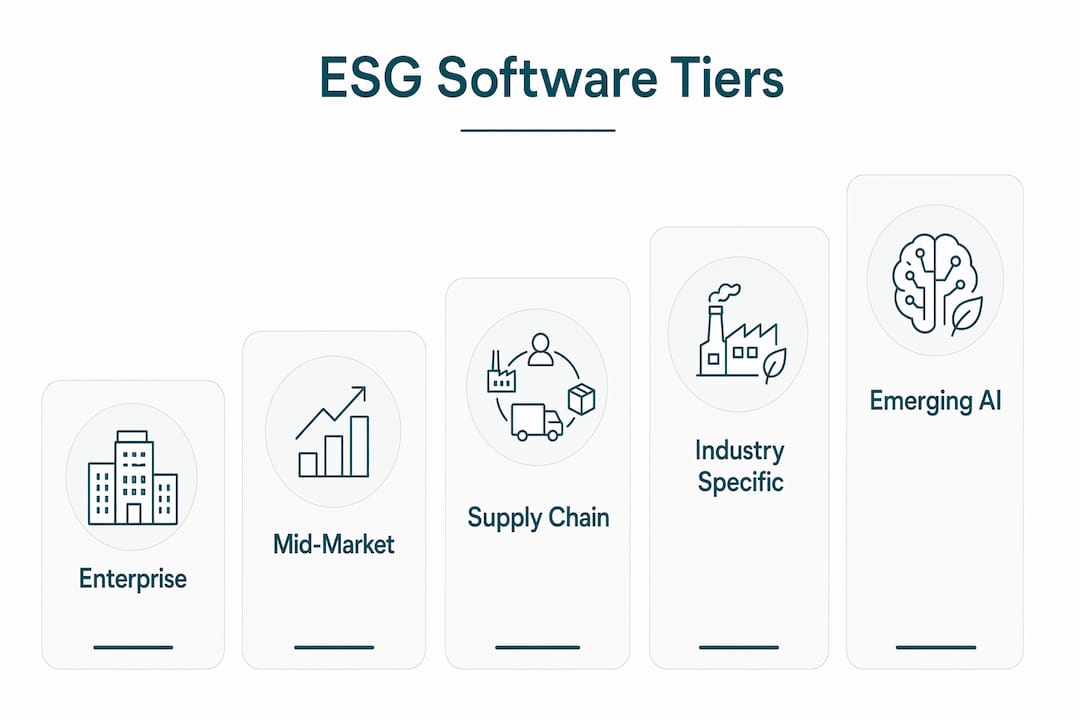
QuantifiedESG and Good.Lab both offer strong analytics dashboards, with QuantifiedESG leaning toward benchmarking and visualization and Good.Lab emphasizing social impact and governance KPIs. Neither is the first call for companies whose primary need is regulatory compliance filing.
BuildESG is the only platform on this list purpose-built for construction. It handles industry-specific ESG workflows, including embodied carbon and site-level data collection, that generic platforms handle poorly.
ESGTree uses AI to assess sustainability risks and opportunities, making it useful for companies that want forward-looking risk intelligence rather than backward-looking disclosure. Its AI-driven approach produces risk scores, not audit-ready filings.
Viridad covers broad sustainability program management with built-in compliance features, suited to organizations running multi-pillar sustainability programs across business units.
How to choose the right ESG reporting software for your company
The single biggest mistake procurement teams make is conflating two fundamentally different categories of ESG software: systems of record built for financial-grade disclosure and sustainability intelligence hubs built for supply chain or risk analysis. Buying the wrong category wastes budget and delays compliance.
Before evaluating any platform, answer three questions:
- What is your primary output? Audit-ready regulatory filings (CSRD, SEC, TCFD) require a system of record. Supplier risk scoring or portfolio ESG analysis requires an intelligence hub.
- What systems do you need to connect? Platforms with prebuilt API and ERP integrations reduce manual data overhead and lower the risk of implementation failure. Prioritize vendors with documented connectors to your existing financial systems.
- What frameworks do you report against? Not every platform supports every standard. Confirm framework coverage before shortlisting.
For objective vendor benchmarking, Verdantix and Gartner both publish ESG software evaluation reports that rank vendors on implementation complexity, feature depth, and customer satisfaction. The KnowESG directory lists more than 850 ESG providers organized by function and compliance framework, which is useful for initial market mapping.
Pro Tip: Request a live data integration demo before signing any contract. A platform that cannot connect to your ERP or financial data system in a demo will not connect in production either.
Watch for scope creep in implementation timelines. Platforms with strong automation claims often require months of data mapping before automation kicks in. Ask vendors for customer references from companies with a similar data environment to yours, not just their marquee enterprise logos.
What experts say about ESG software trends heading into 2026
Research on AI-driven ESG ratings highlights a critical distinction that many buyers miss: alternative AI-based ratings use an “outside-in” approach that generates risk scores from public data, not audit-ready disclosures. These tools serve investor analysis, not regulatory compliance. Conflating the two leads to selecting a risk intelligence tool when you actually need a reporting system.
Statistic callout: Nasdaq Metrio clients save up to $223,000 and 5,400 hours on disclosure preparation annually through workflow automation, illustrating what purpose-built reporting software delivers over manual processes.
ESG integration in alternative investments, including hedge funds and commodities, remains far less standardized than in public equities. Firms in those sectors face frameworks that differ structurally from traditional ownership-based ESG models, requiring customized approaches that most off-the-shelf platforms do not address well.
The divergence between traditional ESG ratings and AI-driven alternatives reflects real methodological differences in issue selection, data sources, weighting, and controversy handling. Buyers evaluating platforms with AI-generated scores should understand what drives rating differences before treating those scores as equivalent to analyst-validated ratings.
Esgautomated: audit-ready ESG reporting for mid-market companies
Most of the platforms compared here are built for large enterprises with dedicated ESG teams, six-figure software budgets, and months to spare on implementation. Mid-market companies face the same regulatory pressure with a fraction of those resources.
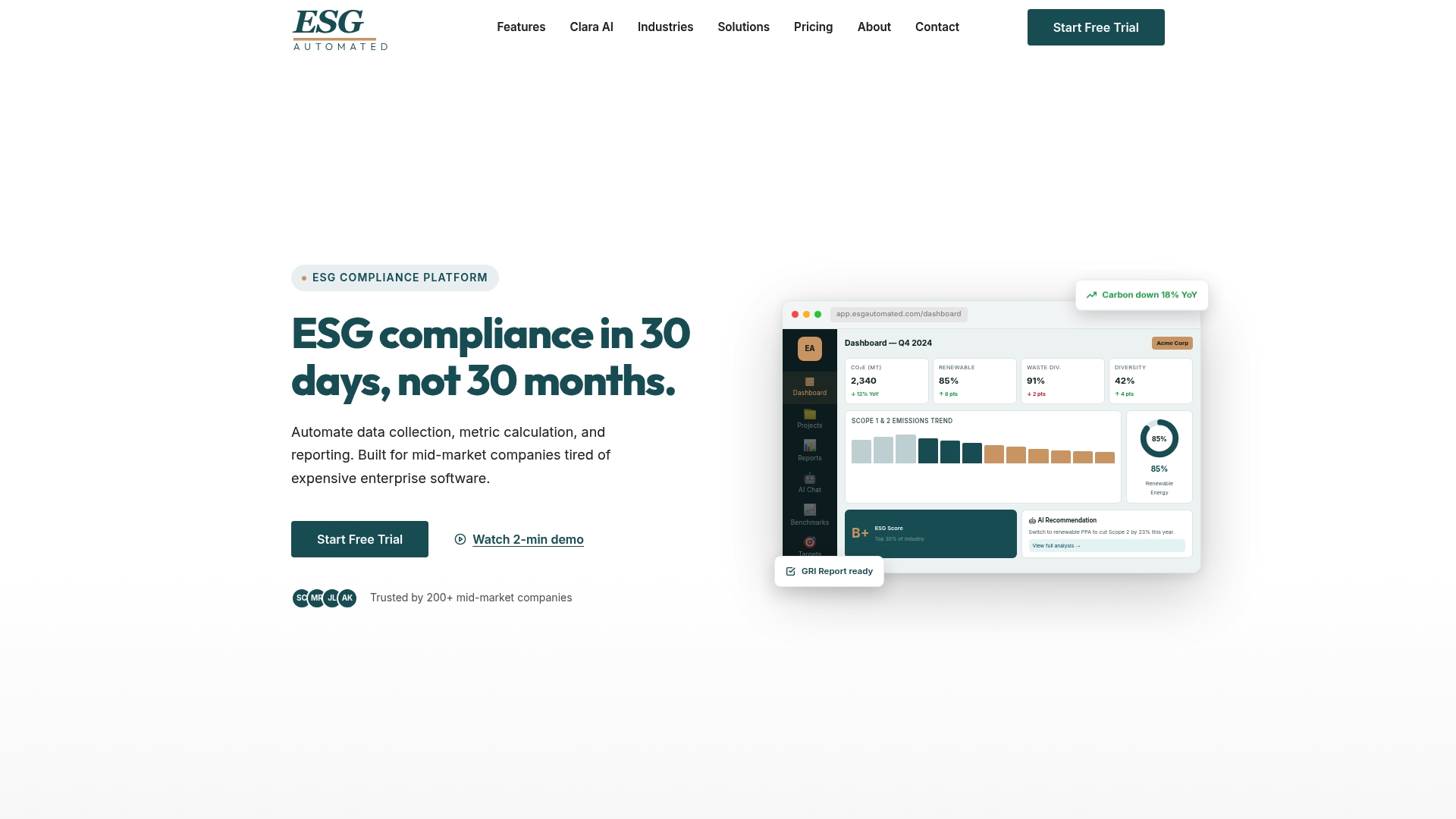
Esgautomated automates data collection, metric calculation, and sustainability reporting across GRI, TCFD, CSRD, SASB, and CDP frameworks, delivering a first audit-ready ESG report in 30 days. That timeline is not a marketing claim; it reflects a platform designed to replace expensive consultants and manual spreadsheets rather than sit alongside them. For US corporate sustainability managers who need ESG reporting automation without enterprise-scale cost or complexity, Esgautomated is worth a direct look.
Key Takeaways
The most effective ESG Playbook alternatives are purpose-built platforms that match your reporting output, framework requirements, and existing system integrations before anything else.
| Point | Details |
|---|---|
| Match software category to your output | Systems of record handle audit-ready filings; intelligence hubs handle supply chain or risk scoring. Buying the wrong type wastes budget. |
| Integration determines implementation success | Platforms with prebuilt API and ERP connectors reduce manual data work and lower project failure risk. |
| Nasdaq Metrio leads on documented savings | Clients save substantial time and costs on disclosure preparation through guided automation workflows. |
| AI-driven ratings differ from audit-ready reports | Outside-in AI scores serve investor analysis, not regulatory compliance filings. Understand the difference before selecting a platform. |
| Esgautomated fits mid-market timelines and budgets | It delivers a first audit-ready ESG report in 30 days across GRI, TCFD, CSRD, SASB, and CDP, without enterprise-scale cost. |