
ESG metrics are defined as measurable indicators used to assess a company’s performance across environmental, social, and governance dimensions, forming the backbone of modern sustainability reporting. The role of ESG metrics extends far beyond compliance checkboxes. They connect operational decisions to financial outcomes, regulatory requirements, and stakeholder expectations. Frameworks like ISSB, CSRD, TCFD, GRI, and SASB all depend on these indicators to produce credible, comparable disclosures. For corporate sustainability professionals, understanding how to select, govern, and communicate ESG performance indicators is now as critical as managing any financial KPI.
What are the main categories and examples of ESG metrics?
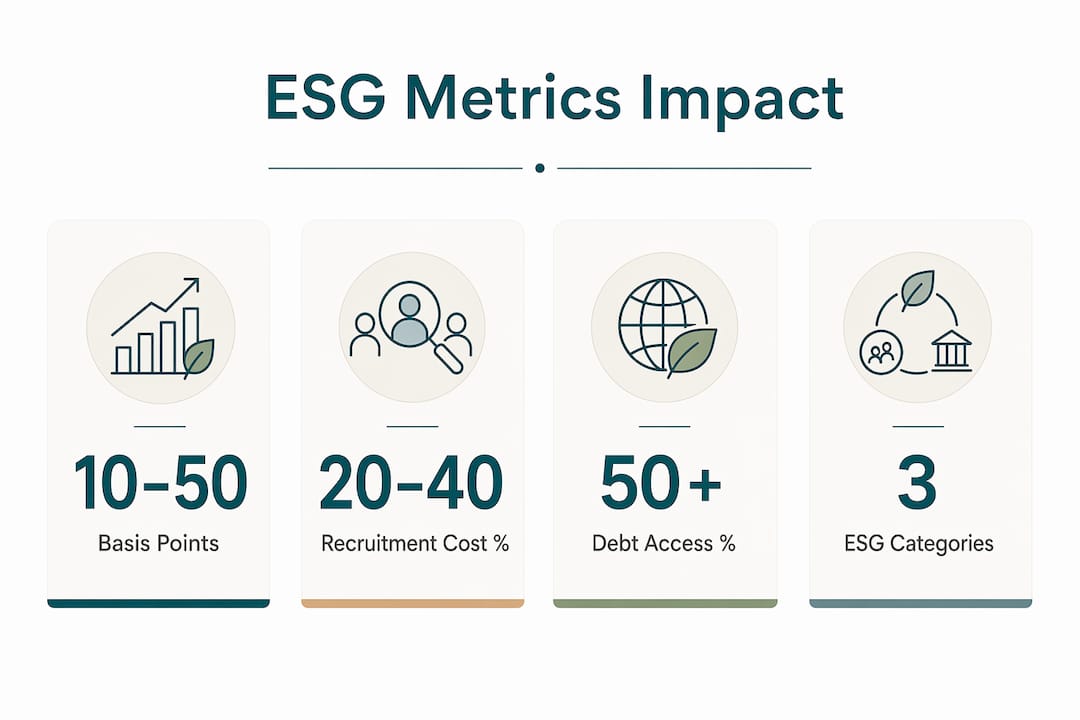
ESG metrics fall into three distinct categories: environmental, social, and governance. Each category captures a different dimension of corporate risk and opportunity.
Environmental metrics track a company’s physical impact on the planet. The most widely reported are greenhouse gas emissions, broken into Scope 1 (direct emissions), Scope 2 (purchased energy), and Scope 3 (value chain emissions). Other key indicators include total energy consumption, renewable energy percentage, water withdrawal and recycling rates, and waste diverted from landfill.

Social metrics measure how a company manages its relationships with people. Core examples include workforce gender and ethnic diversity ratios, lost-time injury frequency rates, employee turnover, pay equity ratios, and supplier labor practice audits. Community investment spend and customer data privacy incident rates also appear frequently in GRI and SASB disclosures.
Governance metrics reflect how a company is directed and controlled. Board gender diversity, the percentage of independent directors, executive compensation linked to ESG targets, anti-corruption policy coverage, and whistleblower case resolution rates are standard indicators across TCFD and CSRD reporting.
| Category | Example Metrics | Common Frameworks |
|---|---|---|
| Environmental | Scope 1, 2, 3 emissions; energy use; water consumption | GRI, TCFD, CSRD, ISSB |
| Social | Workforce diversity; injury rates; pay equity | GRI, SASB, CSRD |
| Governance | Board independence; executive ESG pay links; ethics policies | TCFD, ISSB, CSRD |
The breadth of these indicators matters. A company reporting only carbon emissions while ignoring board diversity or labor practices presents an incomplete picture to investors and regulators alike.
Why are ESG metrics important for corporate performance?
ESG metrics directly affect a company’s cost of capital. Companies with strong ESG ratings access debt at 10–50 basis points lower cost and can cut operational costs by 15–30% through sustainability programs. That spread compounds significantly over a multi-year capital plan.
The talent market responds to ESG performance as well. Recruitment costs fall by 20–40% for organizations recognized as sustainability leaders. That reduction reflects real savings in agency fees, onboarding time, and productivity ramp-up.
Brand trust is another measurable output. Sustainability leadership correlates with 2.5x higher brand trust, 20–30% higher customer lifetime value, and 30% faster crisis recovery. These are not soft benefits. They appear in revenue retention and customer acquisition cost data.
Regulatory risk is the fourth driver. The EU CSRD imposes penalties of up to 10% of annual turnover for non-compliance. ISSB standards now require third-party assurance on key ESG disclosures starting in 2025, with reasonable assurance expected within three years across major jurisdictions. Companies without credible metrics face both financial penalties and reputational damage.
- Access to capital: Lower cost of debt for companies with verified ESG ratings
- Operational savings: Energy, water, and waste programs generate direct cost reductions
- Talent retention: Sustainability performance reduces recruitment and turnover costs
- Regulatory compliance: Verified metrics reduce exposure to CSRD and ISSB penalties
- Brand equity: Measurable trust and loyalty gains tied to ESG transparency
Pro Tip: Map each ESG metric back to a specific financial line item before your next board presentation. Connecting Scope 2 reductions to energy cost savings, for example, converts sustainability data into language that CFOs act on.
How can organizations effectively implement and track ESG metrics?
Effective ESG metric management requires the same internal control discipline applied to financial reporting. ESG reporting requires structured internal controls comparable to financial reporting standards, using frameworks like COSO to withstand third-party assurance and regulatory scrutiny. Without that rigor, companies face greenwashing accusations and regulatory challenges that erode stakeholder trust.
Misuse of stale or unverified ESG data undermines reliability at every level. Treating ESG data like financial data, with version control, audit trails, and approval workflows, is the minimum standard for credible disclosure. This is not optional under CSRD or ISSB assurance requirements.
Effective ESG metric frameworks integrate KPIs, KRIs, and dashboards aligned to risk appetite and enterprise risk management systems. Organizations that build ESG risk dashboards with defined thresholds can flag issues before they become reportable incidents. That early warning function is one of the most underused benefits of a well-designed metrics program.
Automation changes the economics of ESG data management. ESG reporting software reduces manual data collection time by 60–80%, lowering regulatory risk and the cost of compliance. That efficiency gain matters most for mid-market companies that cannot absorb the cost of large consulting engagements. For a practical look at what automation costs and delivers, the ESG reporting cost breakdown guide covers the numbers in detail.
Selecting the right tools requires matching software capability to organizational maturity. ESG software selection must be based on regulatory scope and maturity, not brand prominence, to avoid costly overprovisioning. A company reporting under GRI for the first time does not need the same platform as a publicly listed firm managing CSRD assurance across 20 subsidiaries.
Pro Tip: Before purchasing any ESG platform, audit your current data sources. If your emissions data lives in three separate spreadsheets owned by different teams, fix the data governance problem first. Software cannot compensate for fragmented ownership.
What is the role of ESG metrics in demonstrating ROI?
Translating ESG performance into financial language is the single most effective way to secure C-suite support. Sustainability initiatives drive measurable ROI through a three-tier model that maps directly to how executives evaluate investments.
-
Hard ROI covers direct, quantifiable savings. Energy efficiency programs reduce utility costs. Waste reduction lowers disposal fees. Water recycling cuts procurement spend. These numbers belong in the same financial model as capital expenditure returns.
-
Soft ROI covers cost avoidance. Verified ESG metrics reduce the probability of regulatory fines, litigation, and supply chain disruptions. A company that avoids a CSRD penalty of 5% of annual turnover has generated real financial value, even if no cash changed hands.
-
Strategic ROI covers reputation, culture, and market position. Stronger brand trust, faster crisis recovery, and access to green finance instruments all compound over time. These benefits are harder to quantify in a single quarter but appear clearly in multi-year financial performance.
“ESG ROI should be communicated with financial and strategic metrics that resonate with the C-suite to unlock funding and integration into core business processes. Hard savings, avoided costs, and reputational gains each speak to a different executive stakeholder, and a complete ESG business case addresses all three.”
CFOs respond to Hard ROI with specific numbers attached. CEOs and boards respond to Strategic ROI framed around brand value and market access. Sustainability professionals who learn to present all three tiers in a single briefing close the communication gap that stalls most ESG investment decisions. The ESG benchmarking best practices guide offers a practical framework for building that case with comparable industry data.
Automation and integration of ESG data into enterprise risk management systems increase board-level visibility and improve the credibility of ROI claims. When ESG data carries the same audit trail as financial data, executives treat it with the same confidence. That credibility shift is what moves ESG from a reporting obligation to a strategic asset.
Key Takeaways
ESG metrics are the foundation of credible sustainability reporting, and their value is measurable in financial, regulatory, and reputational terms.
| Point | Details |
|---|---|
| Three metric categories | Environmental, social, and governance metrics each capture distinct risks and must be reported together for a complete picture. |
| Financial impact is real | Strong ESG ratings reduce cost of debt by 10–50 basis points and cut operational costs by 15–30%. |
| Data governance is non-negotiable | ESG data requires version control, audit trails, and COSO-aligned controls to meet ISSB and CSRD assurance standards. |
| Automation reduces burden | ESG reporting software cuts manual data collection time by 60–80%, making compliance achievable for mid-market teams. |
| ROI has three tiers | Hard, Soft, and Strategic ROI each address a different C-suite stakeholder and must all appear in an ESG business case. |
ESG metrics are evolving faster than most programs can keep up
The professionals I work with most closely are not struggling to understand what ESG metrics are. They are struggling to keep their programs credible as assurance requirements tighten and regulators close the gap between disclosure and verification.
The shift I find most significant is the move from voluntary to mandatory assurance. ISSB’s timeline for reasonable assurance on Scope 1 and 2 emissions is not a distant regulatory horizon. It is a near-term operational requirement. Companies that treated ESG data as a communications exercise are now discovering that their data infrastructure cannot support an external auditor’s scrutiny.
My honest observation is that most mid-market sustainability teams underinvest in data governance and overinvest in reporting aesthetics. A beautifully formatted sustainability report built on unverified data is a liability, not an asset. The companies that will lead on ESG in the next three years are the ones building audit-ready processes now, before the assurance deadline forces their hand.
The other shift worth naming is the growing expectation that sustainability professionals speak fluent finance. The three-tier ROI model is not just a communication tool. It is a discipline. Professionals who can connect Scope 2 reductions to energy cost savings, or supply chain audits to avoided procurement risk, will have far more influence over capital allocation than those who present ESG as a values exercise. The role of compliance in ESG strategy is expanding, and the professionals who treat it as a strategic function will be the ones shaping their organizations’ direction.
— ESG Team
How Esgautomated supports ESG metric management
Esgautomated is built for mid-market companies that need audit-ready ESG reporting without the cost of enterprise software or external consultants.
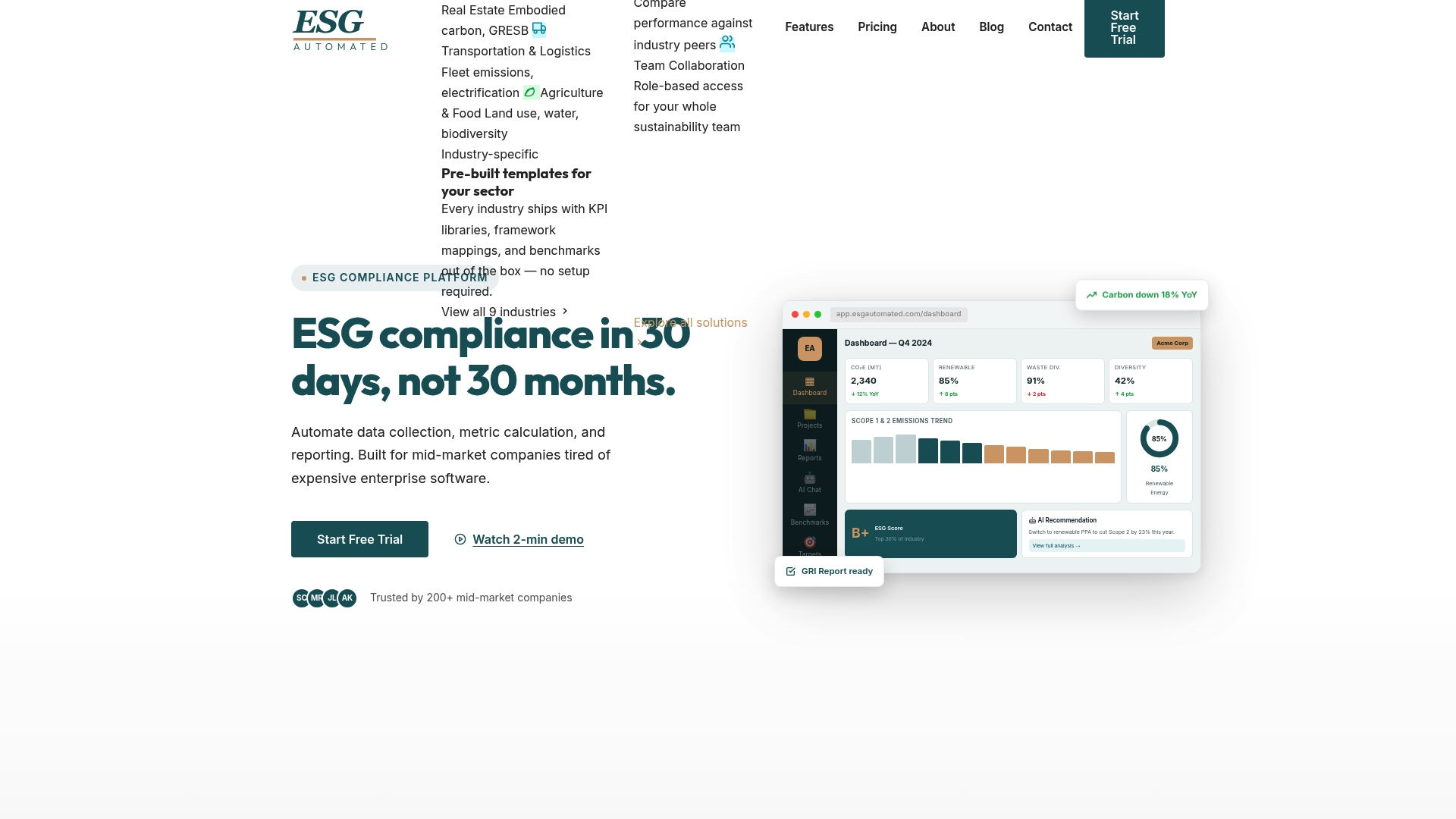
The platform automates data collection, metric calculation, and disclosure across GRI, TCFD, CSRD, SASB, and CDP frameworks. It applies the internal controls and audit trail standards that ISSB and CSRD assurance requirements demand. Companies using Esgautomated deliver their first audit-ready ESG report in 30 days. The platform’s data management solutions replace fragmented spreadsheets with a governed, centralized system that finance teams and external auditors can both rely on. For sustainability professionals who need to demonstrate ROI to their C-suite, Esgautomated provides the verified data that makes that conversation credible.
FAQ
What are ESG metrics?
ESG metrics are measurable indicators that track a company’s performance across environmental, social, and governance dimensions. They are used in sustainability reporting frameworks including GRI, ISSB, TCFD, CSRD, and SASB.
What are examples of ESG ROI metrics?
Hard ROI examples include energy cost savings from Scope 2 reductions and waste disposal fee reductions. Soft ROI examples include avoided CSRD regulatory penalties, which can reach up to 10% of annual turnover.
Why do ESG metrics matter to investors?
76% of investors prioritize sustainability in investment decisions, and companies with strong ESG ratings access capital at lower cost. Verified ESG metrics reduce perceived risk and improve access to green finance instruments.
How do organizations track ESG metrics effectively?
Organizations track ESG metrics by building dashboards that integrate KPIs and KRIs with defined thresholds, applying COSO-aligned internal controls, and using ESG reporting automation to reduce manual effort and improve data accuracy.
What is the difference between ESG KPIs and ESG KRIs?
ESG KPIs measure performance against targets, such as a 20% reduction in Scope 1 emissions. ESG KRIs measure risk exposure, such as the percentage of suppliers without a verified labor practice audit, flagging issues before they become reportable incidents.